History
Monastery history: use and reuse
The Gothic Walkenried Monastery has an eventful history stretching over almost 900 years. In its heyday, around 100 men of God prayed and worked in the monastery and conducted extensive mining operations in the western Harz Mountains of Lower Saxony. Their agricultural activities in the Middle Ages were focused on what is today Thuringia and Saxony-Anhalt.
For over 400 years the Cistercians went about their business behind the walls of Walkenried Monastery. And it has now been over 500 years that the monastery has been put to use by others. Over these years many have shaped this place. Well-known personalities have visited it, while many others have left their mark anonymously.
 |
Around the year 1100 |
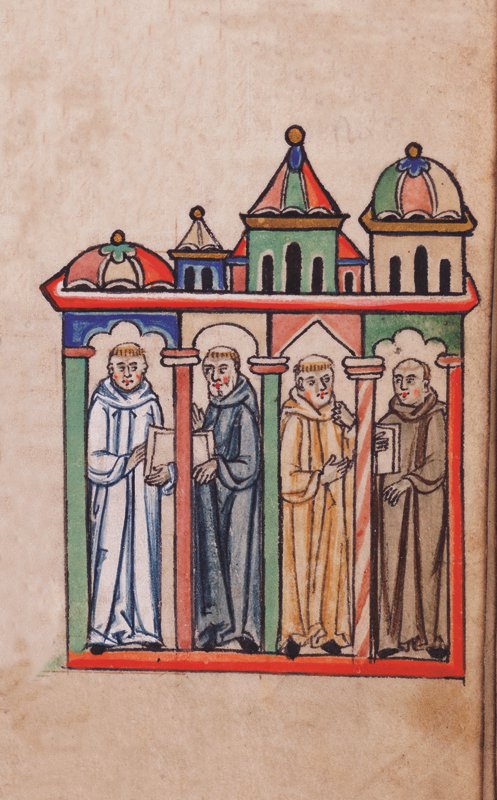
| 1098 | The mother house of the Cistercian order is founded at Cîteaux in Burgundy. It is from here that the new order of the White Monks – their robes are white, in contrast to the black worn by the Benedictines – begins to spread across Europe at breathtaking speed. |
 |
The 12th century |
| 1127 | Adelheid von Walkenried founds the third Cistercian monastery in what was to become Germany. The site at Walkenried fulfils three important criteria: it is next to a watercourse, far from any settlement and has good prospects for economic development. |
| 1129 | A founding party from Kamp Monastery in the Lower Rhine region, consisting of 12 monks and an abbot, reaches the new monastery on the southern edge of the Harz Mountains. |
| 1132 | The German Emperor Lothar III confirms the foundation of Walkenried Monastery. Almost all rulers in the 12th and 13th centuries subsequently confirm and expand the monastery's holdings. The Abbot of Walkenried sends 13 monks to found the first daughter monastery in Schmölln. |
| 1137 | The first monastery successfully founded by Walkenried is established in Pforta/Naumburg. The Romanesque monastery church of Walkenried, around 50 metres long, is consecrated after eight years of construction. |
| 1141 | Walkenried, which is now home to at least 60 monks, founds its second daughter monastery, Sittichenbach, near Eisleben. |
| 1144 | The monastery begins work on draining and clearing the upper wetlands (Oberer Ried) on the southern edge of the Harz mountains. |
| from 1150 | The monks operate numerous granges on the southern edge and later also the northern edge of the Harz and in Würzburg, while mining and smelting at the Rammelsberg in Goslar and in the Harz form a further source of income. The monastery develops into a mediaeval "monastic business enterprise". |
| around 1190 | The hydraulic engineer and lay brother Jordan of Walkenried drains the meadows and swamps of the lower wetlands (Unterer Ried) on the southern edge of the Harz. |
| 1193/94 | Heinrich der Löwe (Henry the Lion) stays as a patient at Walkenried after a riding accident. |
 |
The 13th century |
| 1204 | In 1204 at the latest, Abbot Heidenreich of Walkenried becomes Abbot of the Cistercian monastery at Morimond in Burgundy, of which Walkenried is a granddaughter monastery. |
| 1209 | The German Emperor Otto IV and 53 Cistercian abbots hold consultations at Walkenried. Heidenreich had initiated the construction of the new Gothic monastery church, which Otto IV now supports financially. |
| 1218 | The Abbot of Walkenried receives the last confession of Emperor Otto IV on his deathbed in the Harzburg. |
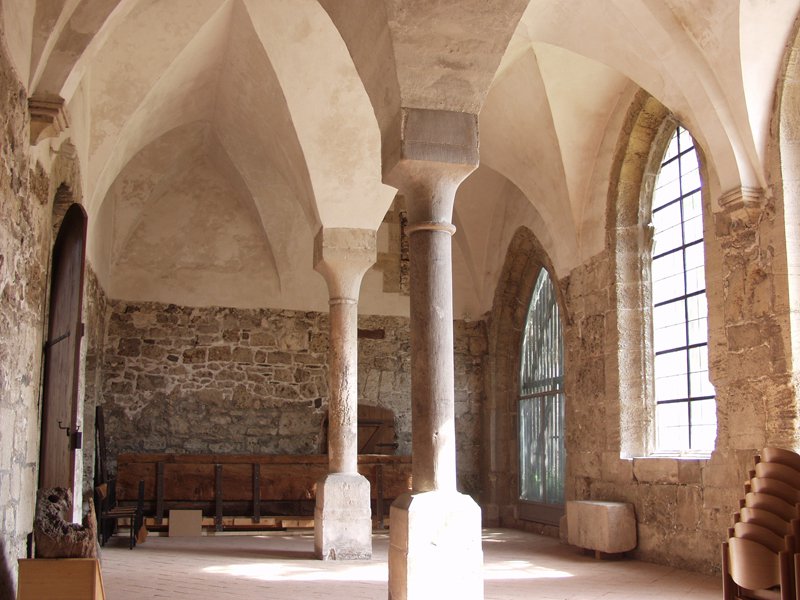
| around 1220 | The Walkenried lay brother and master smelter Almantis probably casts the bronze fountain of the monastery. Around 1220, the chapel of the monks' hospital (infirmarium chapel) is built; its architectural shell survives to this day. |
| 1253 | Work begins on demolishing the Romanesque church. |
| 1280 | 80 monks and 180 lay brothers now live in Walkenried. |
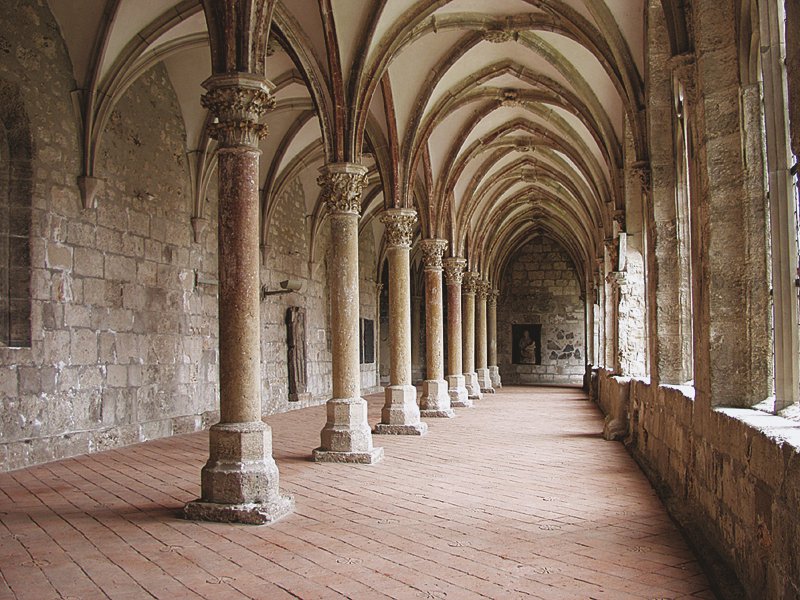
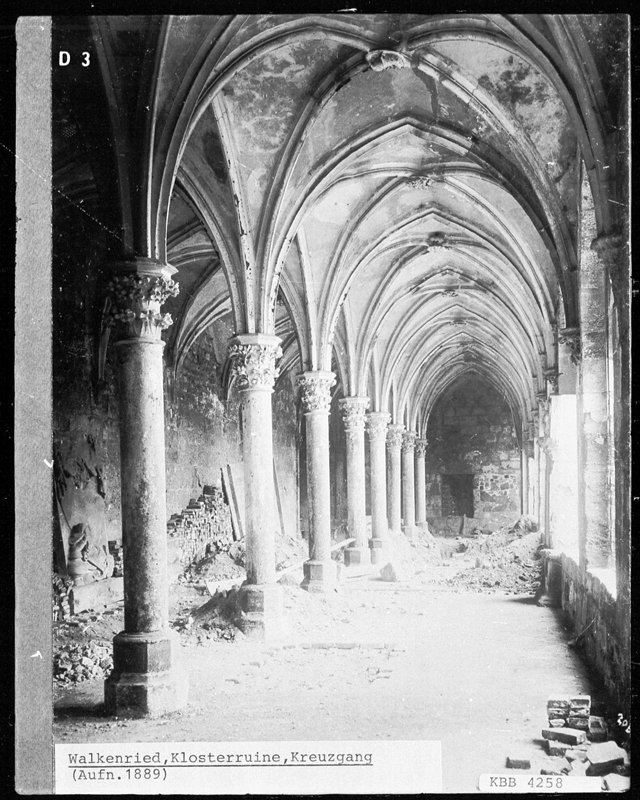
| 1290 | The Gothic monastery church, around 100 metres long and one of the largest in northern Germany, is consecrated after around 80 years of construction. The northern wing of the cloisters, the monks' reading wing, is also completed. Its architectural uniqueness, the double-nave construction and the unusually artistic design characterize the unmistakable hall-like character of this wing of the cloisters. It has become Walkenried's distinguishing architectural feature, its "trademark". |
| end of 13th C. | The monastery's two main business activities, agriculture and mining, are further expanded. |
 |
The 14th century |
| 1300 | The monastery's White Company, already active in many economic fields, secures new business areas by moving into finance. |
| 1323 | The monastery and its granges receive permission to protect themselves with walls and trenches "against lawbreakers". |
| 1326 | The monastery's patrons, the Counts of Honstein, want to appoint a family member as Abbot of the monastery. The monks resist; as a result, in 1327 the Honsteins occupy the monastery. |
| around 1330 | The Gothic enclosure (seclusion area), which is largely preserved today, is finished after around 40 years of construction. |
| 1332 | The Chapel to the White Lady, on the eastern side of the fraternity hall, is erected (dismantled in the 18th century). |
| around 1350 | With profits from mining in decline, the necessary investments to maintain operations cannot be made. The shutting down of the mines in the Harz leads to the complete stagnation of Walkenried's mining activities. The monastery company never recovers from the collapse of metal production. The plague also leads to a crisis in Walkenried's agricultural activities. |
| 1351 | The monastery is given a relic with thorn particles by Duke Heinrich the Older of Braunschweig-Grubenhagen; this is openly displayed for worship. |
| after 1370 | The monastery church's choir requires expensive repairs following damage to the walls due to a high groundwater table and other construction deficiencies. The choir gets a polygonal end wall. The remains of engraved epitaphs for the Lords of Werter, who are buried in the choir, are preserved. |
| around 1380 | The monastery and its granges are repeatedly attacked by robber knights. |
| 1399 | The monastery company is in a financial crisis. The Pope places the monastery under the forced administration of the Abbot of St. Peter's Monastery in Erfurt to repay its debts |
 |
The 15th century |
| from 1406 | The relatives of the Counts of Honstein receive the right to be buried in the monastery church. |
| around 1410 | The monks react to the economic crisis by increasingly relying on money lending as a business. |
| around 1414 | Some of the granges in the southern Harz are repeatedly destroyed during infighting among the Counts of Honstein. |
| from 1444 | Walkenried sheds large parts of its now unprofitable mines in and near the Harz, including the surrounding lands. |
| 1457 | The monastery is placed under the protection of the Landgraves of Thuringia, the Dukes of Saxony and the Margraves of Meißen. |
| 1468 | Walkenried has expanded its income from lending, leased out some of its granges and solidified its financial business. |
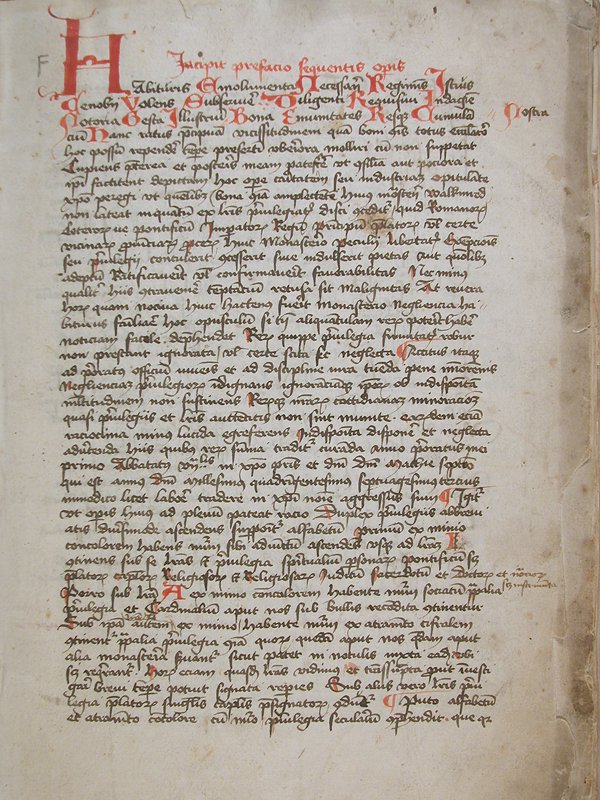
| 1473 | The Prior of Walkenried organizes the monastery's archives. Almost 1500 mediaeval documents survive today, mainly in the State Archives in Wolfenbüttel. |
| 1476 | A decision is made to exploit the copper ore deposits close to the monastery together with the Counts of Honstein. The insufficient metal yield puts an end to this project. |
| 1487 | The Counts of Honstein become Lord Protectors of the monastery. |
 |
The 16th century |
| 1503 | Walkenried has sold off all its unprofitable mining assets. This represents a significant reduction in the monastery's assets. |
| 1506 | Only 12 monks now elect their Abbot in Walkenried. The dormitory is divided into cells. |
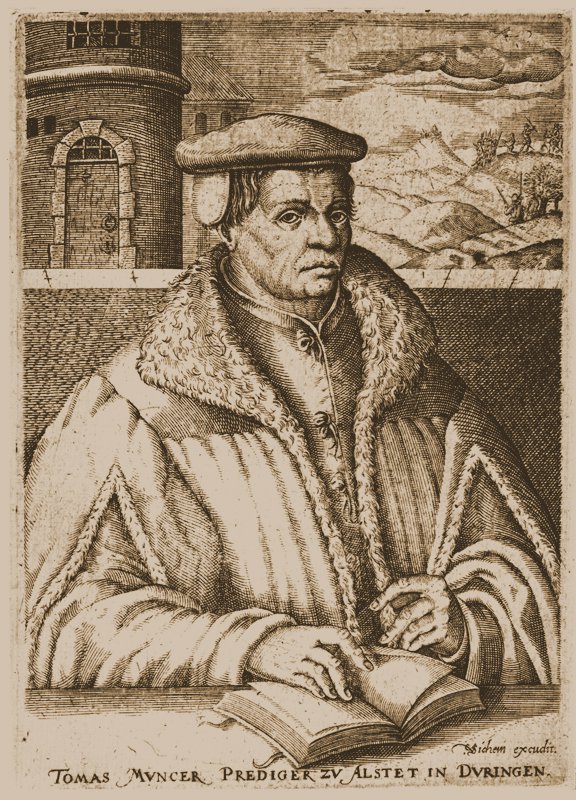
| 3rd May 1525 | During the German Peasants' War, led by Thomas Müntzer, 800 peasants occupy Walkenried Monastery, which is still a significant power in the area despite its economic woes. The insurgents tear down the turret on the church roof, which initiates the decay of the church. The monks flee Walkenried, taking their archives with them. |
| from 1531 | The monastery leases and sells many of its granges and town trading posts. The winged altarpiece, completed in 1499 by Hans Raphon of the Dominican monastery in Göttingen, is placed in the north-eastern corner of the cloisters. |
| 1546 | The few remaining monks in Walkenried convert to the teachings of Martin Luther. Walkenried loses its Cistercian character. |
| 1556 | With the founding of a Latin school, Walkenried takes on a new function. |
| 1565 | Augustus, Elector of Saxony lays claim to the monastery and appoints a director. |
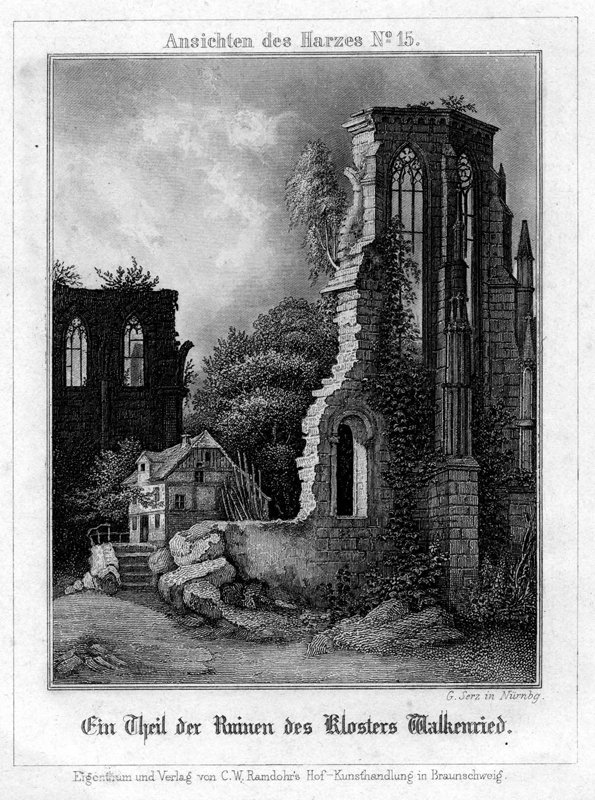
| 1570 | Church services are moved to the chapter house as the church is almost in ruins – 45 years after rebels tore down the church spire during the Peasants' War. The former chapter house is still used as the Protestant church of Walkenried today. |
| 1578 | The last – Protestant – Abbot dies. The Lord Protector of Walkenried, the Count of Honstein, becomes the administrator of the monastery. A Prior is assigned to run the Latin school. |
| 1590 | The monastery's holdings in the Goldene Aue on the southern flank of the Harz are sold off. |
| 1593 | The Bishop of Halberstadt grants fiefdom over the County of Honstein to the Dukes of Braunschweig-Lüneburg. The monastery buildings, remaining land holdings and status of protector thus go to the new lords of the land, the Dukes of Braunschweig-Lüneburg. |
 |
The 17th and 18th centuries |
| 1601 | The first chronicle of Walkenried Monastery, written by Johannes Letzner, is published. |
| 1626 | During the Thirty Years' War, the "Harzschützen" plunder the monastery. |
| 1629 | During the Thirty Years' War, Cistercians from Kaisheim in Swabia take control of Walkenried and for three years attempt to re-Catholicize it. |
| 1631 | The Cistercians from Kaisheim flee from the Swedes, taking with them the late-mediaeval altar of Hans Raphon. |
| 1636 | The Protestant monastery school reopens. |
| 1648 | The Protestant convention is removed and the monastery secularized. |
| 1661 | A former pupil at the Walkenried Monastery school, Johann Heinrich Hofmann, sketches the ruins of the monastery church. |
| 1662 | The former monks' hospital (infirmarium), part of the enclosure (seclusion area), is demolished. Following the Thirty Years' War, the monastery buildings are in very bad shape. |
| 1668 | The monastery school, which had been attended by a total of 1200 or 1300 pupils, is finally closed. Walkenried becomes a complex of domains and an administrative centre. |
| from 1672 | The Gothic monastery church is used as a source of stone for around 150 years. |
| from 1682 | Parts of the enclosure (seclusion area) are demolished. |
| from 1695 | Several small farms are operating within the church ruins. |
| 1715 | The bronze fountain, cast in 1220, is transported to Salzdahlum/Braunschweig on the orders of Duke August Wilhelm and probably melted down; by 1813 its location is unknown. |
| 1723 | A plan of Walkenried Monastery is drafted. |
| from 1725 | A ducal hunting lodge is built south-west of the monastery buildings; today it is in private hands. |
| 1737 | The cells of the dormitory are in use as granaries. |
| 1739 | The lay brothers' wing on the western side of the cloisters is demolished and the bell tower rebuilt. |
| 1757 | The cells in the dormitory, which had been used to store grain, are removed and the dormitory converted into several storage areas. |
 |
The 19th century |
| from 1800 | Numerous artists of the Romantic period are impressed by the church ruins and the cloisters. The renowned architect and conservationist Karl Friedrich Schinkel also visits Walkenried. |
| 1817 | Any further demolition of the church ruins is forbidden. |
| 1831 | A distillery and oast-house (a kiln for drying hops) are built in the south wing of the enclosure (seclusion area). |
| 1834 | The chapter house is restored. |
| 1837 | The cloisters and their gardens have long been in a "desolate state". The first conservation measures are undertaken in the enclosure. The cloisters and the fraternity hall are renovated. |
| 1843 | 900 documents from Walkenried Monastery are transferred from the archives in Hannover to the Ducal State Archive in Wolfenbüttel (today's Sate Archives of Lower Saxony), where they remain. |
| from 1850 | Landscape painters of the Romantic period are impressed by the ruins and the surrounding nature. Walkenried becomes a "painters' paradise". |
| 1852 | In Braunschweig's Court Theatre (Hof-Theater), a diorama of Walkenried Monastery is presented. The accompanying music, by Carl Richter, is lost. |
| 1863 | The farm buildings in the church ruins are demolished. |
| from 1876 | Renovations are carried out to the cloisters and the fraternity hall. |
| 1886 | Regent Prince Albrecht of Prussia, who financed the reconstruction of Dankwarderode Castle in Braunschweig and the founding of what is today the Braunschweig State Museum, visits Walkenried. |
| 1889 | The Protestant church room in the monks' former chapter house is restored. |
| 1899 | The tracery in the cloisters is complemented and some of the capitals are restored. |
 |
The 20th century |
| 1902 | The ruins of the choir polygon partially collapse. |
| 1911 | Remains of the Romanesque monastery church are discovered in early archaeological digs. |
| 1912 | Walkenried advertises to visitors in the "Blauer Harzführer" guidebook. |
| 1917 | Duke Ernst August of Braunschweig visits Walkenried Monastery. |
| 1927 | Walkenried celebrates the 800th year of the monastery. |
| 1936 | The Braunschweig-Stiftung foundation is created. As the proprietor of the monastery, it manages it and rents out the domain lands. |
| 1956 | The southern wing of the monastery complex and the hospital chapel (infirmarium chapel) are sold into private hands by the Braunschweig-Stiftung (today called Stiftung Braunschweigischer Kulturbesitz). The new owner establishes the dance hall "Historischer Klosterkeller" (historical monastery cellar). The former hospital chapel is used as a wood shed. |
| 1957 | The Protestant church room within the former chapter house of the monks is restored and a new stone floor is laid. |
| 1972 | The Gothic choir, in danger of collapsing, is demolished for safety reasons. |
| from 1977 | The Osterode am Harz district is granted responsibility for Walkenried Monastery by the proprietor, Braunschweig-Stiftung (today called Stiftung Braunschweigischer Kulturbesitz), and begins restoration work. This work is accompanied by archaeological digs by the State Office for Historic Monuments of Lower Saxony. |
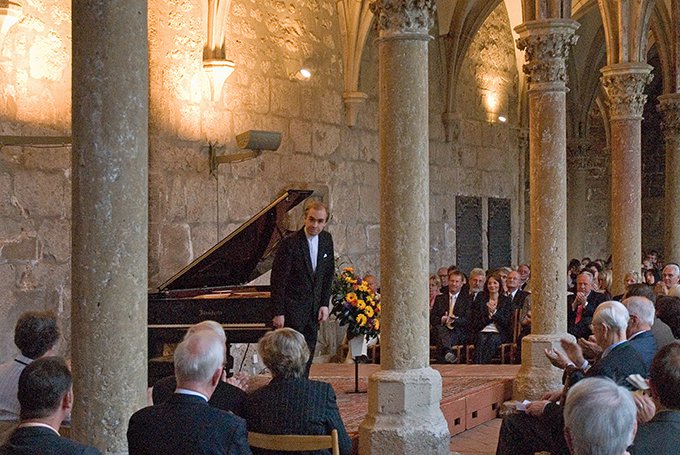
| from 1984 | The Walkenried Cloister Concerts and guided tours for the public begin. |
| 1989 | The choir, which had partly been demolished in 1972 for safety reasons, once again rises up to the sky. |
 |
Present day |
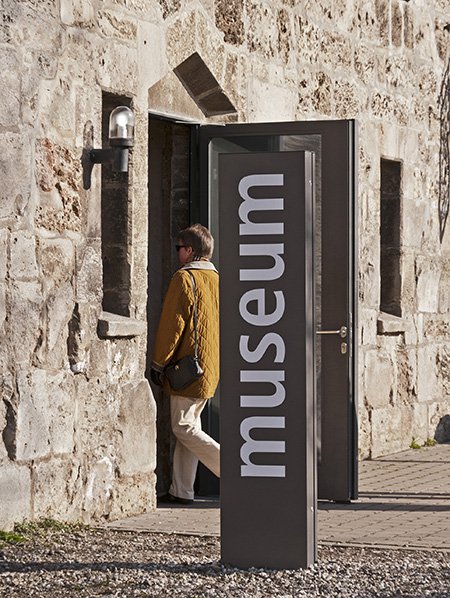
| July 2006 | The Cistercian Museum Walkenried Monastery is opened. |
| 2010 | The Gothic monastery complex is incorporated into the UNESCO World Heritage Site "Mines of Rammelsberg, Historic Town of Goslar and Upper Harz Water Management System" and becomes its oldest component. |
| 2012 to 2015 | The areas to the west and south of the monastery complex, on which further tourism projects are planned, are investigated by the archaeologists of Osterode am Harz District. |
| 2016 | The Districts of Göttingen and Osterode am Harz merge into the new Göttingen District, which takes over responsibility for the museum. |